Giving Plants a Voice in the Future of Agriculture

By 2050, the global population is projected to hit 10 billion people. To support this growth, agriculture must expand production of plants for food, like tomatoes and maize; and fibers, like cotton; all while contending with increased temperatures, longer droughts, and more erratic weather patterns.

Agriculture also requires the use of water and nitrogen-based fertilizers. These resources not only drive up production costs but also have significant environmental impacts. Farming consumes about 70% of the world’s fresh water, primarily for irrigation. Likewise, nitrogen-based fertilizers are vital for crop growth, but they’re often overused, leading to runoff pollution, greenhouse gas emissions, and wasted resources. 

If crops could communicate precisely when and where they need water or nutrients, better information could revolutionize efficiency, cut costs for farmers, and reduce environmental harm. If humans could talk directly to plants, farmers could tell their crops ahead of time to prepare for adverse weather–for example, warning plants to conserve water ahead of a stretch of drought. 

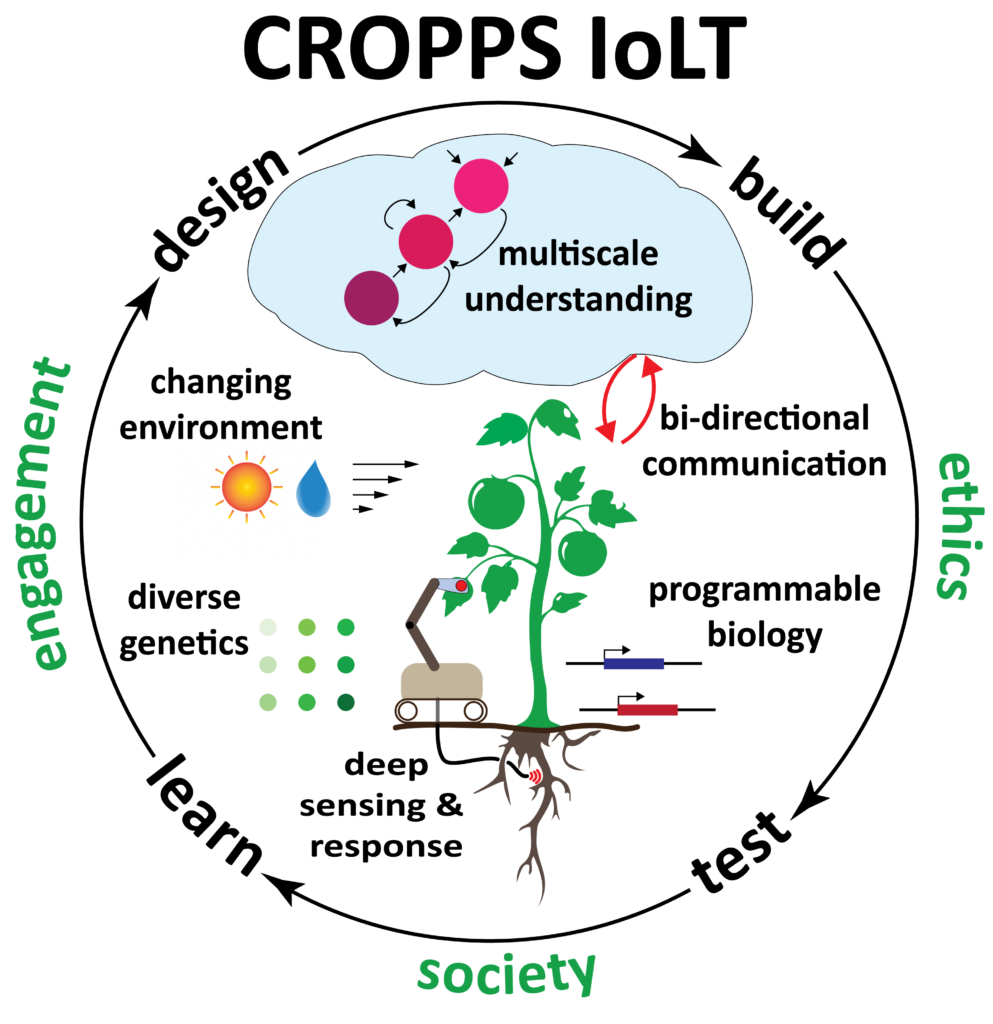
Scientists such as those involved in the Center for Research on Programmable Plant Systems (CROPPS) are pioneering innovative technologies to make agriculture more efficient, sustainable, and responsive. By building Programmable Plant Systems (PPS) that tap into and program plants’ natural communication systems, scientists are helping growers use fewer costly inputs, while also reducing agriculture’s ecological and climate footprint. 
Programmable Plant Systems (PPS)

Over millions of years, plants have evolved complex internal programming. Now, scientists at CROPPS are developing tools to harness these systems in innovative ways.

Programmable plant systems combine sensors, robotic tools, and other technologies to enable living plants to monitor their environments, respond to stimuli, and communicate. Much like a thermostat regulates temperatures in your home, programmable plant systems monitor and adjust plant growth. With this technology, plants can report their needs and environmental conditions and farmers can respond and even program plants to optimize their biological processes. Likewise, plants can communicate to their neighboring organisms about their environment. 

By accessing the natural language of plants, farmers can better manage critical resources like water and nitrogen. Technologies can translate signals directly between plants and growers, leading to more efficient resource utilization and increased crop resilience amid changing environmental conditions.

If you could program a plant, what would you program it to do?

Our Vision

Opening a dialogue with plants to expand our understanding of the living world and empower a future of sustainable, resilient, and nutrient-rich agriculture.

Our Mission

To create a diverse community of researchers and educators who collaboratively develop technological innovations, engage with the public, and make scientific discoveries that support a healthy future for people, plants, and our planet.

Our Team

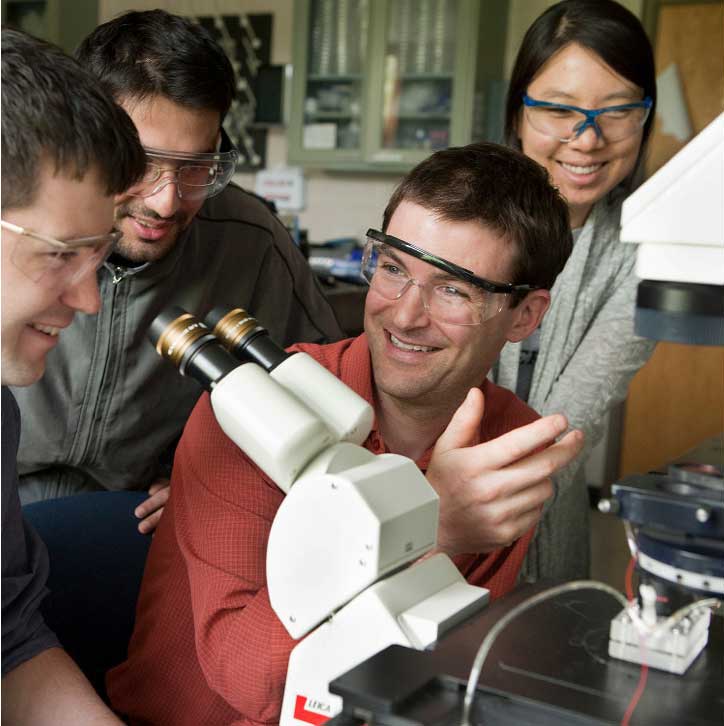
Our transdisciplinary team is made up of experts in plant sciences, engineering, computer science, and the social sciences from leading research institutions.

Meet Our Team Members

Our Partners