The ways plants interact with their environments are shaped by their genetic makeup and the complex biological networks within them. These interactions determine how plants grow, adapt, and thrive across diverse conditions. By studying these relationships in depth, we can unlock new insights into how plants function and evolve.
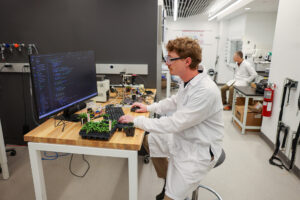
By applying computational modeling and advanced measurement tools, CROPPS scientists aim to explore previously inaccessible traits and discover how plants adapt to changing environments. This work has the potential to expand the adaptive capacity of crops, improve sustainability, and enhance productivity across a wide range of agricultural systems.
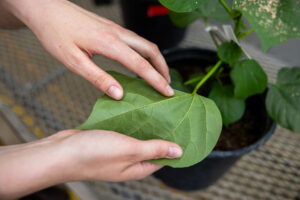
CROPPS researchers are developing methods to fine-tune how plants regulate their stomata—the microscopic pores that control water loss and carbon intake. By working with these natural mechanisms, we can help crops conserve water in dry conditions. CROPPS scientists are also developing systems to adapt plant architecture during a plant’s growing season, allowing crops to optimize traits like canopy density, leaf angle, and root depth to improve productivity, water efficiency, and resilience in changing environments.